Some links here are affiliate links. If you buy through one, Little Everyday Luxuries may earn a small commission, and it costs you nothing extra. How that works.
I owned candles for years before I ever burned one on a night with nothing planned. They sat on a shelf, unlit, waiting for a dinner party or a holiday that would justify using them. In the meantime, my actual evenings, the ones that made up the overwhelming majority of my life, happened under a plain overhead light that made everything look a little flatter and a little more like a waiting room than a home.
It took me an embarrassingly long time to notice the pattern. I was saving something meant to make an evening feel warmer for the rare evenings that already had other people there to provide warmth, and denying it to the ordinary evenings that could have used the help the most.
What finally made me light one
It was an unremarkable Wednesday. I got home, made dinner, and instead of turning on the overhead light out of habit, I lit one of the candles that had been sitting on the shelf for over a year. I turned off the main light and let the candle and a lamp do the work instead. Dinner was the same food I would have made anyway. But the room felt different, and because the room felt different, I felt different in it.
It sounds like a small thing, and it is. But the smallness is exactly why it worked. I did not need an occasion to justify it. I just needed to stop requiring one.
What candlelight actually does
Overhead lighting is built for function. It is bright, even, and designed so you can see clearly enough to do tasks. That is useful for cooking or cleaning, but it is not particularly useful for feeling settled at the end of a day. Candlelight is dimmer, uneven, and moves slightly, which forces the room to slow down a little just to be seen by it. You cannot rush through a space lit by candlelight the same way you rush through one lit by a bare bulb overhead.
That slower quality of light seems to carry over into how you move and how you feel while you are in it. I do not have a scientific explanation for why, only the repeated experience of it being true in my own apartment, night after night.
Saving something for special occasions is really just a way of deciding that most of your life does not qualify as special. I stopped agreeing with that math.
Making it an actual habit
The hardest part was not lighting a candle. It was remembering to, and giving myself permission on a night that had nothing to celebrate. A few things made it stick.
- Keeping a candle and matches somewhere visible near where I eat dinner, so lighting it did not require digging through a drawer
- Making it part of arriving home rather than something I decided on later, so it was tied to a moment that happens every day
- Choosing scents I actually like rather than saving the good ones, since the point was to stop saving things at all
- Letting it burn through an entire ordinary evening rather than blowing it out the moment dinner ended
Within a few weeks it stopped feeling like an indulgence and started feeling like how evenings simply worked in my apartment. That shift, from special to normal, is the actual goal. Not to make every evening feel like a party, but to raise the baseline of what an ordinary evening gets to feel like.
The bigger habit underneath this one
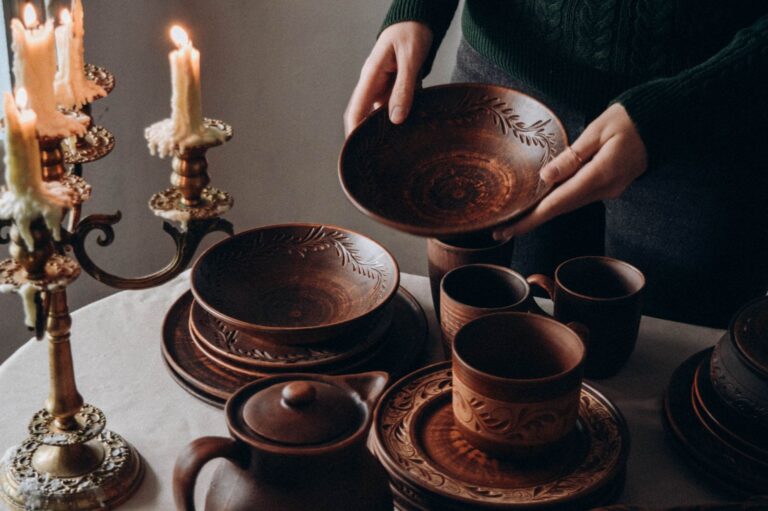
Candles were the easiest place for me to notice the pattern of saving nice things for occasions that rarely arrive. But the pattern shows up elsewhere too, in the good dishes kept in a cabinet, the nice soap kept for guests, the good pen kept in a drawer instead of used. All of it comes from the same quiet belief that ordinary days do not deserve the good version of things.
Lighting the candle was really about pushing back on that belief, one evening at a time, until it stopped being the default assumption.
What surprised me most
I expected the candle to be a nice touch and nothing more, a bit of atmosphere layered on top of an evening that would otherwise stay the same. What actually happened was different. The lower light seemed to slow down how fast I moved through the apartment. I lingered at the table instead of clearing my plate the moment I finished eating. I noticed the quiet instead of immediately reaching for the television to fill it. None of that was something I planned. It just followed naturally from a room that was no longer lit like an office.
I also started noticing which evenings I reached for the candle without thinking and which ones I still had to talk myself into it. The nights I most wanted to skip it were usually the tired, flat ones, the ones where the old habit of saving nice things for later tried hardest to reassert itself. Those turned out to be exactly the nights the candle helped the most, which is its own small argument for lighting it anyway, especially when part of you would rather not bother.
If you only do one thing
Tonight, on a day with nothing to celebrate, light a candle you have been saving. Turn off the overhead light and let the room exist in that different, slower kind of light for the length of your evening. Notice whether the evening itself starts to feel different simply because the room around it does.