Some links here are affiliate links. If you buy through one, Little Everyday Luxuries may earn a small commission, and it costs you nothing extra. How that works.
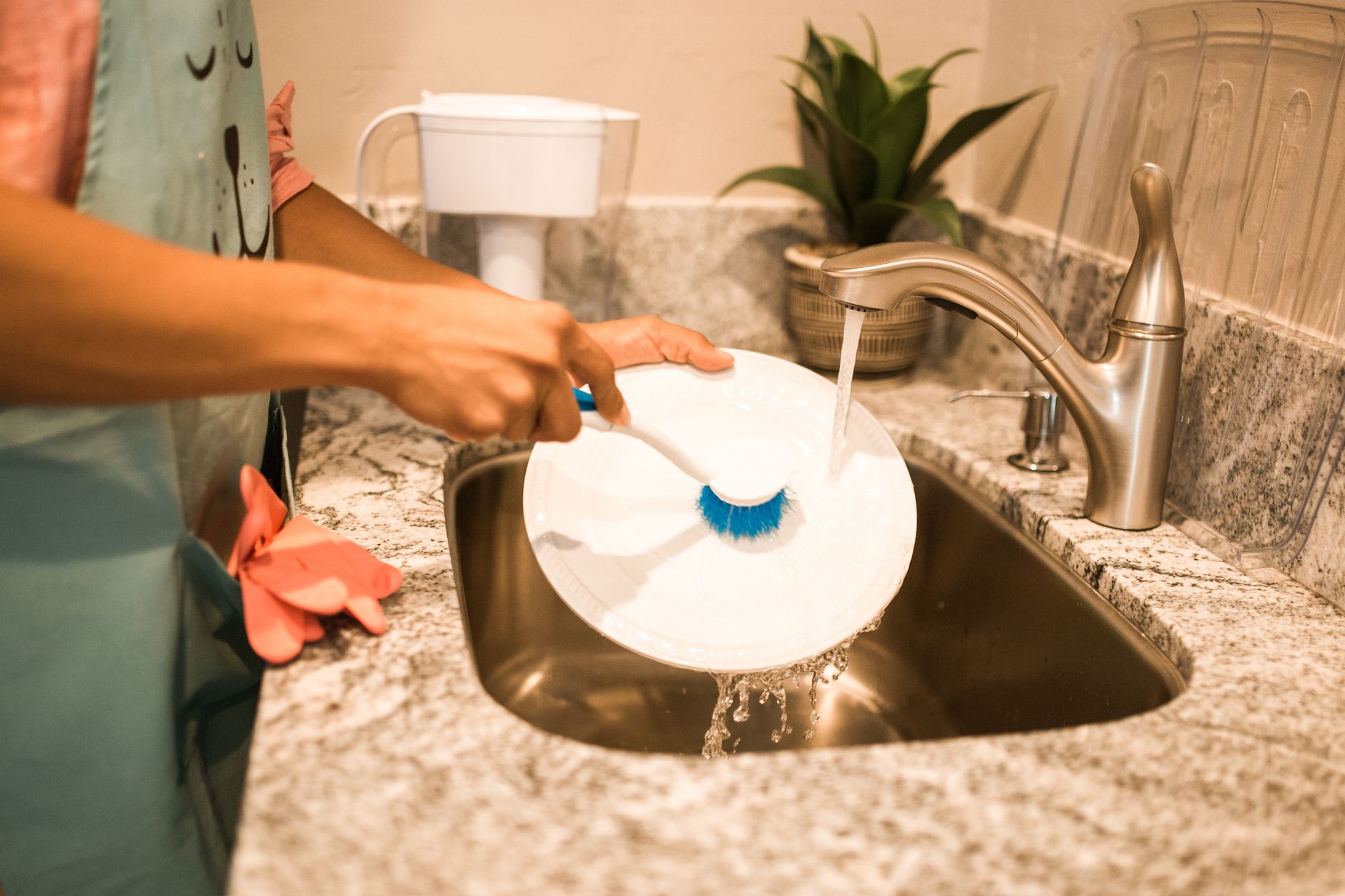
I did not think a dish brush could change my relationship with my own kitchen. For years I used whatever sponge showed up in the multipack, the kind that goes soft and gray within a week and starts smelling faintly of old onions no matter how often I rinse it. I never thought about it because it was not a thing you were supposed to think about. Then I switched to a wooden-handled dish brush with a replaceable head, and washing dishes stopped being the part of the evening I put off.
The difference is not really about cleaning power. Both the old sponge and the new brush get a plate clean. The difference is in how it feels in my hand, how it smells, and how quickly it dries. A brush does not hold water the way a sponge does, so it is not sitting in a damp puddle by the faucet turning into a small ecosystem. It dries between uses. That alone removed the low-level dread I did not know I was carrying every time I reached for the sink.
What actually changed
I want to be specific about this because “upgrade” can mean a lot of vague things. Here is what changed for me:
- No more damp, sour smell lingering near the faucet by Wednesday
- I do not have to remember to replace the whole thing every few weeks, just the brush head
- It stands upright in a little cup instead of collapsing into a wet heap on the counter edge
- Scrubbing stuck-on food takes less effort because the bristles have actual structure
None of that is dramatic. But dishes happen every single day, sometimes multiple times a day, and small friction compounds. When the tool you reach for repeatedly stops being slightly unpleasant, the whole task gets lighter without you doing anything different.
Where the upgrade stops mattering
I want to be honest about the edges of this, because not every version of “nicer dish brush” is worth chasing. Once you have something with a decent handle, a head that actually dries out between washes, and bristles stiff enough to knock food off a pan, you have gotten the whole benefit. Beyond that point you are choosing based on how it looks in the cup by your sink, which is a fine thing to care about but is not the same as function improving further.
I also do not think the handle material matters as much as people online seem to think it does. Wood feels nice. Plastic works fine too. What matters is the shape: something you can grip without your hand cramping, with a head angled so you are not bending your wrist at an odd angle over a full sink.
The test I use now: does this tool make we want to put off the task, or does it make the task disappear into the rest of my evening without me noticing it happened? That is the whole question.
The part that surprised me
What I did not expect was how much the smell mattered. A sour sponge is one of those things you get used to without realizing you are used to it, the way you stop smelling your own kitchen after a while. When I finally got rid of the sponge entirely, I noticed the absence of a smell I had not consciously registered as a smell. That is the kind of upgrade that is hard to explain to someone else, because you cannot point to the improvement, you can only point to the thing that is no longer there.
I also did not expect to care about how the brush looked. It sits out, visible, next to the faucet, all day every day. A sponge is something you hide because it is a little embarrassing. A brush in a simple cup looks intentional, like part of the kitchen rather than something tolerated in it. That is a small thing but it changes how the whole counter reads.
What I would tell a friend
If you are on the fence about whether this is worth doing, I would say: try the replaceable-head version before you try anything fancier. You do not need to spend a lot to find out if this matters to you. The core benefit, no more damp sour sponge, comes from the shape and the drying, not from any premium material. Get the shape right first.
And give it two weeks before you judge it. The first few days you will not notice anything because you are still on autopilot. It is around day ten, when you realize you have not thought about the smell near your sink even once, that the upgrade actually registers.
If you only do one thing
If you only do one thing from everything I have said here, get rid of whatever sponge is currently living in a puddle by your faucet and replace it with something that stands up and dries out between uses. You do not need to research this for hours. You do not need the most expensive option on the shelf. You just need something that is not sitting in its own water all day. That single change is doing almost all of the work, and everything past it is preference, not function.
I still think about how strange it is that something this small took me years to notice. But that is usually how it goes with the little things we do every day without looking at them closely. Sometimes the upgrade was always available, waiting for you to actually pay attention to the object you touch the most and ask whether it deserves a little more thought than you have been giving it.