Some links here are affiliate links. If you buy through one, Little Everyday Luxuries may earn a small commission, and it costs you nothing extra. How that works.
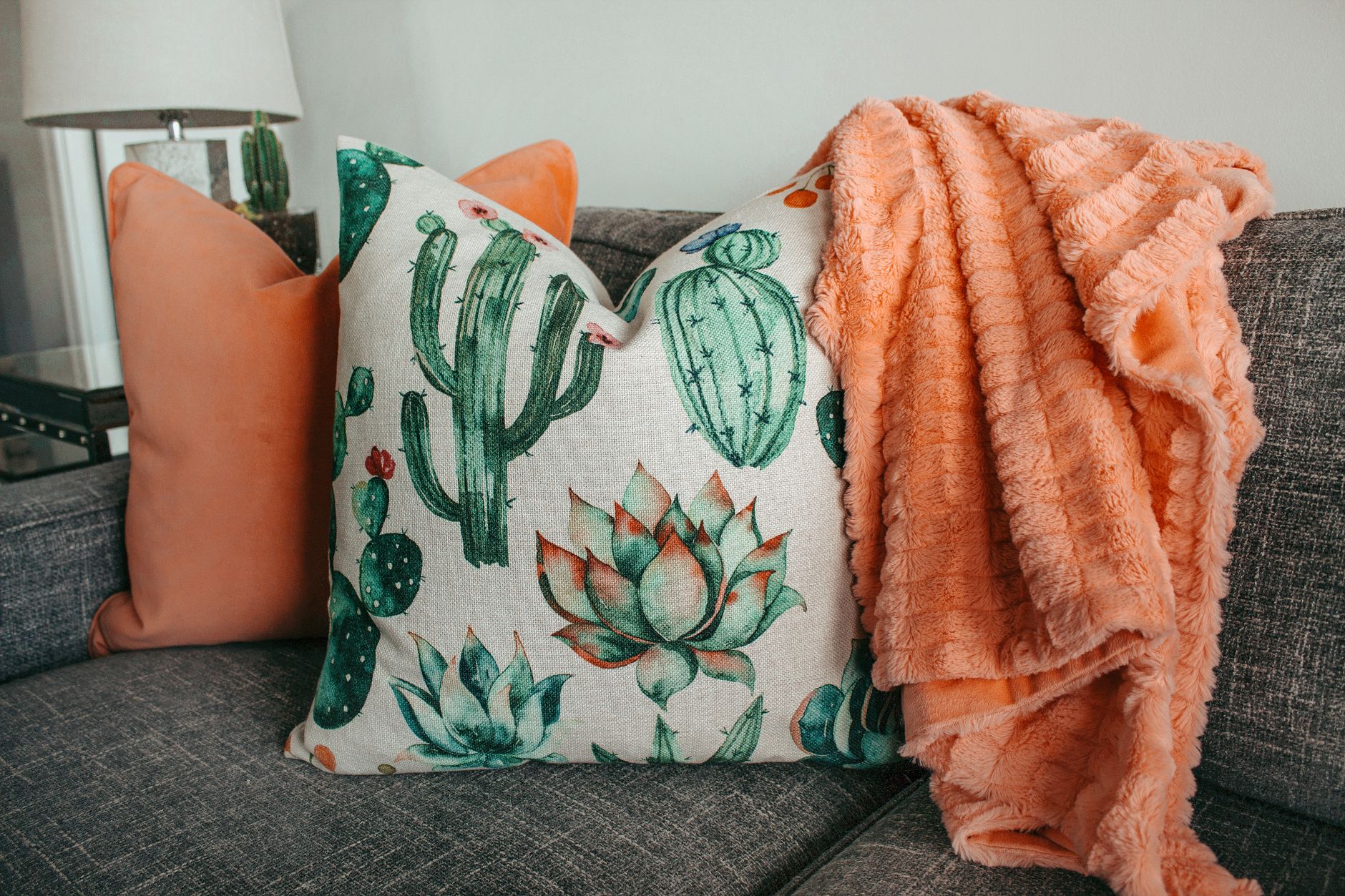
At the point where I owned six throw blankets for a couch that seats three people, I finally admitted something was off. Every one of them had seemed like a good idea at the time. A heavier one for winter. A lighter one for the in-between months. One in a color I liked better than the others. One that was a gift. One I bought because the first one I loved was out of stock and I panicked and got a backup. By the time I counted, the couch itself was barely visible under a pile that guests had to physically move before they could sit down.
The moment it stopped being cozy
Cozy was the word I kept using to justify each addition. A house full of soft things felt warm, felt cared for. But somewhere past the third blanket, the effect flipped. Instead of looking inviting, the couch looked like it was being used for storage. A friend actually asked, half joking, where she was supposed to sit. That question stuck with me longer than I expected it to.
The thing about throw blankets specifically is that they are cheap enough to feel like a non-decision. Nobody budgets for a throw blanket. It gets added to a cart alongside something else, an afterthought that costs the same as a coffee and a pastry. That low cost is exactly why they pile up. There is no moment where you have to seriously weigh whether you need one, because each individual one barely registers as a purchase at all.
What actually gets used
I tracked it for a month, which felt a little silly but told me everything. Out of six blankets, I reached for two. One heavier one for actually cold evenings, one lighter one for the mild ones. The other four sat folded, moved around, occasionally washed for no real reason other than they looked like they should be washed, and otherwise contributed nothing except visual clutter and a chore every time I wanted to actually sit down.
A blanket you own but never reach for is not comfort. It is just fabric taking up a cushion.
The rule I landed on
Two blankets, one per season range, full stop. If I want a new one, an old one goes to a donation bag that same week, not eventually. I also stopped keeping a blanket around purely because it was a gift. A blanket sitting unused in a basket is not honoring the person who gave it to me. It is just guilt with a nice pattern on it. I now actually think about that person more, oddly, when I use the blanket I genuinely reach for, because using something well is a better tribute than storing something out of obligation.
What the couch looks like now
Two blankets, folded over the arm, both of which get used most weeks. The couch is visible again. Guests sit down without moving anything first. And the strange part is that it still looks cozy, maybe more so, because two blankets in use read as lived-in, while six blankets in a pile read as a problem nobody has solved.
This translates directly to other soft goods around a house. Pillows on a bed that outnumber the people sleeping in it by four to one. Extra bath towels bought in a color that seemed nice at the time, layered under the ones actually used every day. The pattern is the same everywhere: an item that is cheap and soft and easy to justify individually, multiplying quietly until the room it is meant to comfort starts working against you instead.
Where the extra four blankets actually went
I did not throw them away, which felt important to say out loud, because the point of this was never to waste what I already owned. Two went to a donation drop-off. One went to a friend who was setting up a first apartment and genuinely needed it. The last one, the gift one I had been keeping out of obligation, I finally gave back into rotation at a different spot in the house entirely, folded at the end of the bed instead of the couch, where it turned out to actually get used because the context was different.
That last part surprised me. A blanket that failed on the couch succeeded on the bed, not because the blanket changed but because I had been forcing every soft item in the house into one location instead of asking where each one actually belonged. Spreading things out by function, rather than piling them all in the one room that gets the most attention, solved more of the clutter than getting rid of anything did.
- Track what you actually reach for over a real stretch of time, not what you assume you reach for
- Set a hard number per category and let a new item retire an old one
- Do not keep something purely out of gift guilt; use it well or pass it along
- Notice when cheap price is letting purchases skip past your usual judgment
If you only do one thing, count the throw blankets, or their equivalent in your own house, currently in a pile somewhere, and compare that number to how many you actually used last month. Let that gap decide what stays.